
 4.8 ★★★★★ 3,000+ Google Reviews
Since it began as the “Google Self-Driving Car Project” in 2009, Waymo has become a household name in autonomous driving. In 2020, the company launched a fully driverless commercial service to the public in Phoenix, Arizona.
Waymo’s presence has also significantly grown since then. As of March 2026, fully autonomous Waymo robotaxis operate in 10 U.S. cities. Although this expansion is great, as research shows autonomous driving improves road safety, it has also introduced a new risk of accidents.
Cases of Waymo accidents have been reported over the years. These crashes usually involve complex legal and technological issues, such as manufacturing defects, software flaws, sensor failures, and so on.If you are injured in a Waymo accident, it’s important to work with an attorney experienced in product and corporate liability. Adam S. Kutner is skilled in helping injured victims hold corporations accountable.
START YOUR FREE CONSULTATION
NO FEES UNLESS WE WIN!
Understanding Waymo and Self-Driving Car Accidents in Nevada
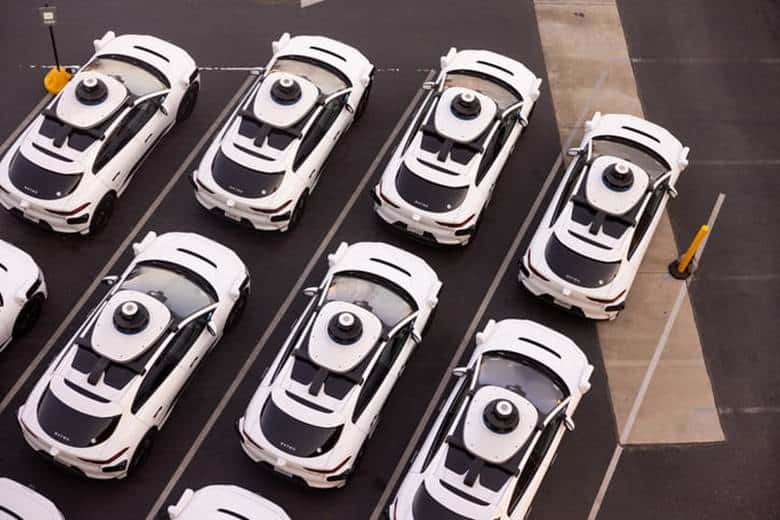
Las Vegas is a key testing ground for autonomous vehicles. The Nevada Department of Motor Vehicles (DMV) regulates the process. It requires manufacturers and developers to meet certain requirements to test their vehicles in the state.
Nevada was the first state to legalize the testing and operation of autonomous vehicles (the bill was signed in 2011). The Nevada DMV set safety and performance standards and, in 2012, introduced $5 million in insurance for testing autonomous vehicles (AVs) on public roads.
The state’s clear process and supportive environment allow companies to test their vehicles. Additionally, Las Vegas’ diverse driving conditions and varied weather conditions make it an ideal testing ground.
A self-driving vehicle uses a variety of sensors and artificial intelligence (AI) to work. Its “brain” is a sophisticated AI-driven central computer system, called the self-driving stack. It processes data from other technological tools to perceive, reason, and act.
Sensors, such as LiDAR, cameras, radar, and ultrasonic sensors, are for perception (sensing and interpreting the environment) and localization (precise positioning). And algorithms and AI tools for planning and control.
While these systems are effective, they can malfunction. Adverse weather (rain/fog/snow), debris, or poor lighting can obscure cameras and cause sensors to fail, resulting in missed objects.
If AI fails, it might not recognize objects or misidentify them. Further, a vehicle’s software can experience errors, leading to misinterpretation of traffic signals, inability to understand the environment, and so on. The braking, steering, or communication systems can also fail due to harsh weather conditions, wiring failures, and physical damage.
If an AV malfunctions, an accident can occur. Self-driving car accidents differ from traditional driver negligence cases, as they are frequently treated as product liability cases. Also, liability in these cases shifts from drivers to corporations, such as a manufacturer, software developer, or technology provider.
Common Causes of Waymo and Autonomous Vehicle Accidents
Software or AI errors can cause several problems in an AV, including faulty braking, steering, or object detection. For example, a faulty AI model may fail to detect a white tractor-trailer against a bright sky or mistake a pedestrian for a non-critical object.
Hardware or sensor failures can also prevent proper obstacle recognition. For instance, misinterpreting a shadow or plastic bag as an obstruction, resulting in sudden, unexpected deceleration (ghost/phantom braking). These failures may also lead to failure in recognizing lane markings, traffic signals, or a stopped car.
Additionally, cameras that fail to detect obstacles might fail to see a pedestrian or a traffic cone. Moreover, AI misinterpreting road markings and making wrong path decisions can lead to unintended steering, such as sharp veering or drifting into oncoming traffic.
Self-driving vehicles also generally struggle to interpret unexpected environments. For example, in November 2025 in Los Angeles, a Waymo driverless taxi with a passenger inside drove just a few feet away from a felony arrest in which officers had their weapons drawn on the suspect. The lane adjacent to the arrest was unblocked, so the car interpreted it as a safe and navigable path.
It’s important to note that remote human intervention is crucial when a car encounters an unfamiliar/complex scenario. When safety drivers fail to intervene or break the law, for example, by making an illegal turn, an accident can happen.
Another cause of autonomous vehicle accidents is inadequate testing or calibration before deployment. This can lead to sensor, software, and perception failures.
Call (702) 382-0000 For a Free Consultation
Who Can Be Held Liable in a Waymo Accident?
Under Nevada law, a human operator, manufacturer, software developer, or third-party fleet operator can be held liable for a Waymo accident.
A human operator for failing to intervene when needed, Waymo or fleet operators for operational and maintenance negligence, software developers for defective code or flawed AI updates, and hardware manufacturers under product liability for defective components.
Nevada’s modified comparative negligence rule allows the recovery of damages only if the injured party is 50% or less at fault. Compensation is also reduced by the degree of fault when an injured party is determined to be partially responsible for the accident.
Evidence Needed for a Waymo Autonomous Vehicle Claim
First, preserve vehicle and company data immediately by taking photos and videos of the vehicle’s ID number, sensors, and the driverless cabin. If you are a passenger, save screenshots of the trip details (ride identification, time, location, and route). Then, collect contact information from witnesses.
In addition, obtain Waymo’s “black box,” LiDAR feeds, and sensor logs by sending a letter to the company through your attorney. It will also help to work with technical experts to reconstruct the event using digital data to understand what caused the accident and who is liable.
Other documents to gather are police reports, photos and videos of the accident scene and your injuries, and medical documentation.
Recoverable Damages in a Waymo Accident Lawsuit
When you are injured in a Waymo accident lawsuit, you can recover:
- Economic damages for medical care, lost wages, and property damage.
- Non-economic damages for pain and suffering, mental anguish, and reduced life enjoyment.
- Punitive damages may apply for reckless corporate conduct, for example, the company continuing to operate a vehicle despite knowing of a malfunctioning sensor system.
Serious injuries require expert calculation of long-term costs. You don’t want to accept an offer before getting adequate information about your injuries.
Why Choose Adam S. Kutner for Your Waymo Accident Claim?
Adam S. Kutner has 35+ years of local experience and deep industry knowledge. Our lawyers are experienced in handling car accidents, including those with unique circumstances, like self-driving accidents.
Our firm also has a background in insurance defense. Therefore, we know how insurers operate, an inside knowledge that allows us to develop strategies that maximize compensation.
Additionally, we are skilled in handling multi-party cases. We help clients identify and hold all liable parties accountable. Our autonomous vehicle accident attorneys always coordinate with tech experts to get more information about cases.
Lastly, our fees are contingency based. No payment unless you win.
Get a Free Consultation for Your Self-Driving Car Accident
Were you injured in a self-driving accident? Get legal guidance to protect your rights. Taking immediate action is crucial, due to Nevada’s two-year filing deadline. A self-driving car accident lawyer will help you preserve vehicle data logs and protect legal rights.
Contact our team for a free, no-obligation case review.
Call (702) 382-0000 For a Free Consultation
FAQ
Call (702) 382-0000 For a Free Consultation
Areas We Service in Las Vegas, Nevada
Henderson | Anthem | Summerlin | Paradise | Summerlin North | Summerlin South | Sunrise Manor | Nellis AFB | Desert Shores | Downtown South | Charleston | Richfield | Crestwood | Angel Park Ranch | Queensridge | Casa Grande Pines | Winchester |

Adam S. Kutner
PERSONAL INJURY LAWYER
With more than 35 years of experience fighting for victims of personal injury in the Las Vegas Valley, attorney Adam S. Kutner knows his way around the Nevada court system and how to get clients their settlement promptly and trouble-free.