
 4.7 ★★★★★ 2,735 Google Reviews
Filing an insurance claim for property damage and personal injuries after a car accident can be stressful. There can be confusion about who is responsible in a no-fault state or how claims work in an at-fault state. Find out who pays for car damage in a no-fault state and what Nevada drivers specifically need to know.
When you need a trusted and reliable resource for assistance in filing an insurance claim in Las Vegas, or elsewhere in Nevada, after an auto accident, look no further than Adam S. Kutner, Injury Attorneys. We offer a free consultation to discuss your case, explore your legal options, and determine the value of the compensation you are entitled to receive.
START YOUR FREE CONSULTATION
NO FEES UNLESS WE WIN!
Who Is Responsible for Vehicle Damage?
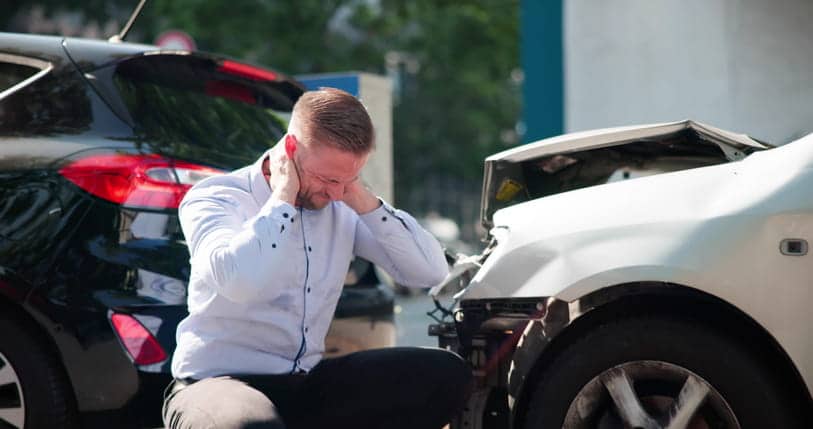
Insurance responsibilities after a car accident, and car damage recovery after a no-fault accident, require you to file a claim for personal injuries with your personal injury protection (PIP) coverage. Once you hit your coverage cap, then you can claim against the at-fault driver’s insurance.
No-fault rules apply to personal injuries and losses related to those injuries, such as medical bills and lost wages, not vehicle damages. No-fault insurance property damage coverage does not apply. For property damage, you would file a claim against the at-fault driver’s insurance initially. Property damage claims processes in no-fault states are similar to those in at-fault states.
In comparing at-fault vs. no-fault car accident claims, in at-fault states, you file personal injuries and property damages against the at-fault driver’s insurance. If your losses exceed the coverage limits of the at-fault driver, then you would claim against your insurance if you have collision, UM/UIM, and other such coverages.
Fast, Reliable, And Thorough Service For All Accident Victims
The days after a crash matter most. Our team is available 24 hours a day to respond quickly, coordinate treatment, and communicate with insurers. We handle every part of your case from start to finish, including paperwork, negotiations, and claim strategy, so you do not have to worry about missing a step. Fast, reliable, and thorough service is how we approach every auto injury case.
De-Mystifying No-Fault Insurance: What It Actually Covers
No-fault insurance states offer similar coverage as you would find in at-fault states, with the addition of PIP coverage. PIP coverage covers your medical payments and lost wages up to your coverage limit. No-fault states have a minimum mandatory coverage amount for PIP. For example, Florida requires a minimum of $10,000 in PIP coverage.
The purpose of PIP coverage is to speed up insurance claims processes and provide medical payments and lost wage payments much faster. It is also meant to help reduce personal injury lawsuits for minor injuries. Additionally, coverage is guaranteed, regardless of who is at fault for the crash. So, even if you were the at-fault driver, you can still file a claim for your personal injuries.
No-fault insurance systems are found in states like Kentucky, New Jersey, Pennsylvania, and Florida. When someone is injured in a crash, they file injury claims against their insurance first. If they exceed their coverage limit or have serious injuries, then they can file a lawsuit and sue the at-fault driver for further compensation. Property damage claims are still based on who was at fault for the accident.
At-Fault (Tort State) vs. No-Fault Systems: A Clear Comparison
The types of claims you file and whose insurance you file them against are the primary differences between at-fault and no-fault states, as follows:
- No-fault states: Regardless of who is at fault, you file against your PIP coverage initially for your injuries. Once you hit your coverage limit, then you can file against the at-fault party’s insurance, or if you meet a minimum threshold of severity, then you can seek further compensation and non-economic damages, such as pain and suffering. The at-fault driver is still liable for property damage, which is covered by their property damage liability (PDL) coverage.
- At-fault (tort) states: The driver responsible for the accident is liable for all personal injuries and property damages, including medical costs, lost wages, vehicle damage, and non-economic losses, such as pain and suffering. The injured party files their claim against the at-fault driver’s bodily injury liability (BIL) and PDL insurance coverages.
Nevada Is an At-Fault State: What This Means for Your Car Damage Claim
Is Nevada a no-fault state or an at-fault state? While understanding no-fault auto insurance is worthwhile in case you ever get into an accident in a no-fault state, Nevada is an at-fault state, not a no-fault state. What to do after a car accident in Las Vegas or elsewhere in Nevada when filing your insurance claim takes into account the following:
- The state’s at-fault system focuses on determining fault, which is necessary to determine the amount of compensation the at-fault party owes the victim.
- The at-fault driver is legally obligated to pay for all losses the other party experiences, including personal injuries, the cost of car repairs, or the current vehicle value if the car is totaled.
- The accident victim receives compensation from the negligent driver’s BIL and PDL coverages, as allowed by Nevada laws and legal processes.
- The amount of compensation you receive can be reduced if you are partially at fault.
Current mandatory minimum Nevada auto insurance requirements require all drivers to have:
- $25,000 in BIL
- $50,000 in BIL per accident
- $20,000 in PDL
You can purchase additional BIL and PDL coverage protection, as well as other types of coverage to protect your vehicle, such as collision and comprehensive coverage.
Call (702) 382-0000 For a Free Consultation
How Fault Is Determined in a Nevada Car Accident
Determining fault in a Nevada car accident involves collecting and reviewing various evidence from the car crash, including:
- Witness statements: Individuals who saw the crash can provide detailed accounts of how the accident occurred and what each driver did.
- Vehicle damage: Another valuable piece of evidence used to determine car accident fault is by the location of damage.
- Driver statements: Any statements made to the police or insurance company are used to decide who is at fault.
- Police report: The police report will have an initial assessment, accident scene observations, driver and witness statements, and other details, such as skid marks, and it can help decide fault.
- Pictures and videos: Pictures of the accident scene, dash cam, traffic cam, and post-crash videos are valuable pieces of evidence.
- Accident reconstruction: In complex cases or when fault is being disputed, accident reconstruction can help paint a clearer picture of the events that took place and who was at fault.
An insurance adjuster will initially review the available evidence after a claim has been filed. Their assessment can be subjective, as they work for the insurance company. So, they want to settle the case for the least amount possible. Their assessment may result in both drivers sharing a percentage of the fault.
Your car accident injury lawyer will also use the evidence to help determine fault and establish the amount of compensation you can seek. They will leverage the evidence to obtain a favorable car accident settlement for property damage and personal injuries. In the event a settlement cannot be reached, the court will be presented with the evidence during a trial to help determine fault.
Nevada’s Modified Comparative Negligence Rule
Nevada’s personal injury laws allowed for a modified comparative negligence rule. In any claim for personal injuries and property damage, comparative negligence can be asserted as a defense by the defendant or their insurance company when the plaintiff was also partially at fault for the car crash.
Under Nevada law, a person can recover damages as long as they are not 51% or more at fault for the accident. As long as they were 50% or less at fault, they can still file a claim and receive compensation.
However, the total settlement is reduced by the percentage they are determined to be at fault. For example, your settlement offer is $10,000, but you were found to be 20% at fault. As a result, you will only receive 80% ($8,000) from the other party’s insurance.
Key Evidence Used To Establish Fault
Establishing fault and determining what percentage each person contributed toward the car crash relies on key evidence, such as:
- Police reports
- Witness statements
- Driver statements
- Passenger statements
- Photos and videos of the accident scene
- The location and extent of vehicle damage
- Dash cam and traffic cam coverage
- Medical records to correlate the severity of the impact and resulting injuries
- Expert analysis
- Accident reconstruction
After a crash, if it is feasible, you should gather as much evidence as you can, like taking pictures and videos, obtaining witness contact details, and obtaining a police report number. Doing so can make it easier to establish fault. However, you should always take care of your injuries first and foremost.
Your Options for Getting Your Car Repaired After a Las Vegas Crash
You have several options for getting your car repaired, depending on the specifics of the crash.
Option 1: File a Claim Against the At-Fault Driver’s Insurance
Most people will use this option when someone else was at fault for the crash. You file a third-party claim against their insurance for your vehicle damages. Their insurance company will assign an adjuster, who will investigate your claim before making a settlement offer. The timeline of an auto accident claim process using this option can take longer to complete.
Option 2: Use Your Own Collision Coverage
You can file your vehicle damage against your own collision coverage if you have it. This optional coverage is required if you have a loan or lease. It is often recommended, even if you do not have a loan or lease because it makes the car accident damages and insurance claims process much faster.
Initially, you file against your collision coverage and pay your deductible upfront. Then your insurance company will seek reimbursement from the at-fault driver’s insurance company through a process called subrogation. You may also be reimbursed for your deductible in certain cases.
When comparing collision coverage vs. no-fault insurance, it is vital to remember that collision coverage applies to your vehicle’s damage, not your personal injuries.
What If the Other Driver Is Uninsured?
If the other driver is uninsured, you can file your vehicle damage against your UM/UIM (uninsured/underinsured motorist) coverage. While this coverage is not mandatory in Nevada, all insurance companies are legally required to offer it to you. It is highly recommended to purchase UM/UIM coverage to protect yourself in case the other driver is uninsured.
Why You Need an Experienced Lawyer for a Property Damage Claim
Since Nevada is an at-fault state, it is in your best interests to always speak to an experienced lawyer after a car crash to discuss your options and protect your legal rights. It is vital to remember that you will have to deal with the negligent party’s insurance company, which can become challenging when they are disputing fault.
Some of the benefits of having a skilled attorney assist with your claim include:
- Investigates the car crash to firmly establish the other party’s fault.
- Handles all communications with the insurance company, preventing lowball offers.
- Fights for a fair settlement that covers all economic and non-economic damages related to your injuries and property damage.
- Navigates the legal process, even if the insurer refuses to pay fairly, including filing a personal injury lawsuit and litigating the case in court, when needed.
Protecting Your Rights and Your Vehicle
In no-fault states, no-fault systems apply to injuries, not property damage. In Nevada, an at-fault state, the driver who causes the accident pays for your injuries and vehicle damage. While the process can seem straightforward, disputes over fault and the value of your claim are common unless you have help from a qualified car crash attorney. Your average car accident settlement is also much more when you have a lawyer representing your interests.
Don’t navigate the claims process alone. Collecting a car accident settlement or judgment is much easier when you have legal representation. Contact the experienced lawyers at Adam S. Kutner, Injury Attorneys, for a free consultation to discuss your case and ensure you recover damages fully.
Call (702) 382-0000 For a Free Consultation
FAQ
Call (702) 382-0000 For a Free Consultation
Areas We Service in Las Vegas, Nevada
Henderson | Anthem | Summerlin | Paradise | Summerlin North | Summerlin South | Sunrise Manor | Nellis AFB | Desert Shores | Downtown South | Charleston | Richfield | Crestwood | Angel Park Ranch | Queensridge | Casa Grande Pines | Winchester |

Adam S. Kutner
PERSONAL INJURY LAWYER
With more than 35 years of experience fighting for victims of personal injury in the Las Vegas Valley, attorney Adam S. Kutner knows his way around the Nevada court system and how to get clients their settlement promptly and trouble-free.